Tuesday, September 19, 2023

Blog #5 - Technology Reflections

 I chose to reflect on a technology a classmate of mine covered, which was the history of the Google search engine. A link to their blog post can be found here. I chose to reflect on this technology because I  used Google's search engine a few times in my life, especially Google Scholar.

When I was reviewing the presentation about Google's search engine, there were quite a few things I did not know about Google. For example, I did not know about its origins and the use of "spiders". I only knew about what the search engines used to look like, the amount of products they have produced, both dead and alive, and the doodles they do! 

What would become the Google search engine was created in 1995 by Larry Page and Sergey Brin, two students attending Stanford University. They created a program called BackRub, which used an algorithm called PageRank. 

This algorithm works by counting how many times a link to a website is on any given  webpage, which is counted as a "vote". Websites that are "higher quality" have their "votes" weighed more heavily, which impacts the website's rank.


Yes, you read that correctly, this algorithm gives webpages a rank from 0 to 10 to determine their importance. However, this number alone is not a make-or-break situation for these websites. Google also uses text-matching techniques to find important websites that match what the user is looking for. 

Google also claimed they still use this algorithm due to the growth of the web benefiting this system. In fact, the amount of links I put on my blogs is likely contributing to this algorithm, since Google owns Blogger!

Since Google's release, a variety of search engines released, such as Brave, DuckDuckGo, and Ecosia. but what about search engines that came before Google? 

A list of former search engines is listed here, but Aliweb and WebCrawler catch my eye.

Aliweb allows users to write or submit index files to their server to get their servers on the search engine. However, the difficulty of this process affected their popularity and the size of their database.

WebCrawler was a search program capable of indexing every word on a webpage, which was used to bring search results to the user. This was done thanks to a robot with the same name indexing every word on the page. 

So far, I have learned about web crawlers and the impact they have had on search engines, especially with WebCrawler, so it was news to me when I learned web crawlers and spiders are the same thing!

These spiders are used to index websites to a search engine's database and store copies of websites in databases for faster loading. There is also a robot.txt file that tells web crawlers which web pages do not need to be indexed. This file can also stop these web crawlers from taking up too many resources, which causes the search engine to slow down.

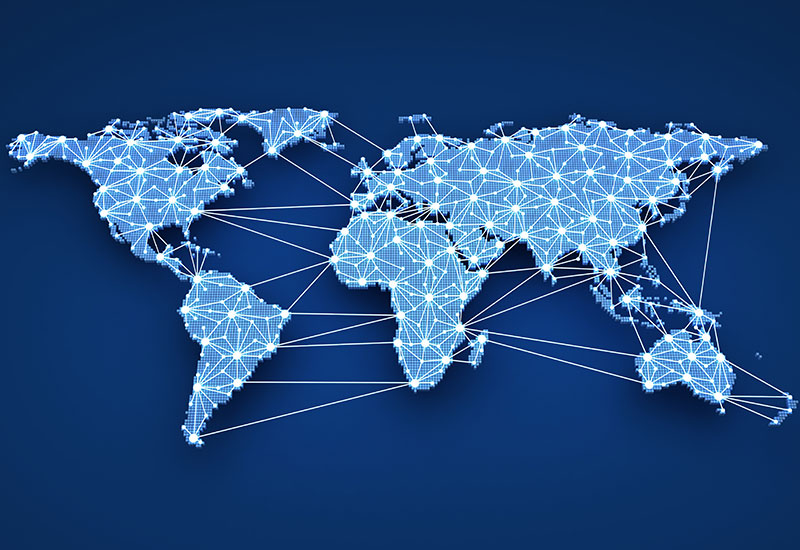
Search engines have become an influential part of our lives, regardless of what web browser you are using. I did not know about the importance of web crawlers until I reflected on my peer's blog post about Google. With around 1.88 billion websites in the world today, I now know how the World Wide Web got its name. 
Sunday, September 10, 2023

Blog #4 - All about Email

 Email has been with me since I was born, and it was something I used to take for granted. Email, short for electronic mail, allows users to communicate with each other from anywhere on the planet within minutes. I did not think about email a lot because of social media and instant messaging do the same thing, but after researching this technology, I was surprised to learn that there are around 4.2 billion users in 2022, that is over half of the world's population!

A timeline about email and other technologies can be viewed here. The first email program was created on August 6, 1965, at the Compatible Time-Sharing System located at the Massachusetts Institute of Technology. It started as a MAIL command, which was written by Tom Van Vleck and Noel Morris. The MAIL command they wrote is not like the email addresses we use today, it looked something like the image above.

Notice the lack of an @ symbol in the image. The reason this is in our email addresses today is because of Ray Tomlinson, an MIT graduate who went to work for BBN Technologies. 

Explaining what he did is a bit complicated, but he merged two file transfer protocols, previously called CPYNET and SNDMSG, into one program. There was one issue that arose from this, there was no way to separate the name of a user and the name of the host. Ray solved this by using the @ symbol to separate the two. 

He used this symbol for two reasons, it was never used and because it meant "at", so the user can say they use a specific host. Ray also mentioned that the first email was sent to two computers right next to each other and that domains like .com did not exist yet.


 The email is not the first form of electrical communication to send text, that would go to the telegraph, developed by Samuel F.B. Morse in 1835. Samuel would also go on to develop Morse Code in 1838 with Alfred Vail, a friend of his. 

Another machine invented before the email was the typewriter around 1868. The typewriter was able to print all 26 letters while the telegraph relied on electric pulses or visual signals. 

Both of these technologies were combined with the introduction of the teleprinter in 1908. The teleprinter operated on TELEX, which was a communications service focused on sharing and printing documents with anyone subscribed to the service. 

However, the teleprinter used switching centers to connect callers in local areas and a subscription for international message services like TELEX, which an email did not need. The same worldwide access, the faster speed, and the ability to edit documents were what propelled the email over TELEX.

Unfortunately, the invention of the email came with negative consequences, one of them being the amount of spam emails users have to deal with. If a user is emailed by multiple websites or people, their inbox can be quickly flooded. Around 2014, almost 70% of these emails were spam! That number has gone down to 45% as of last year, but that is still close to half of all emails! 

These spam emails can come from malicious individuals or companies trying to advertise their services. Emails can also be maliciously used to either get personal information by phishing or flooding internet traffic with computer viruses like the Melissa virus. Because emails can be sent in minutes, this allowed viruses to quickly spread to other computers. 

To wrap up my post, the email was first created at MIT by Tom Van Vleck and Noel Morris. It was later improved by Ray Tomlinson, who implemented the @ symbol into emails, something we still have to this day. 

There have been other technologies like the teleprinter and telegraph, but the lack of a subscription, the ability to edit documents, and the same worldwide reach propelled email above other technologies. Email is a revolutionary invention, but it has been used to send spam and viruses across the world.


Saturday, September 9, 2023

Blog #3 - Eight Values of Free Expression

 In our class, we discussed the eight values of free expression, which are the Marketplace of Ideas, Participation in Self-Government, Stable Change, Individual Self-Fulfillment, Check on Governmental Power, Promote Tolerance, Promote Innovation, and Protect Dissent. Out of all of these values, promoting innovation, individual self-fulfillment, and the marketplace of ideas are some that resonate with me.

Innovation leads to ideas that change the way we live our lives. An example of an innovative idea is the wheel and axle, which may have come from rolling logs. 

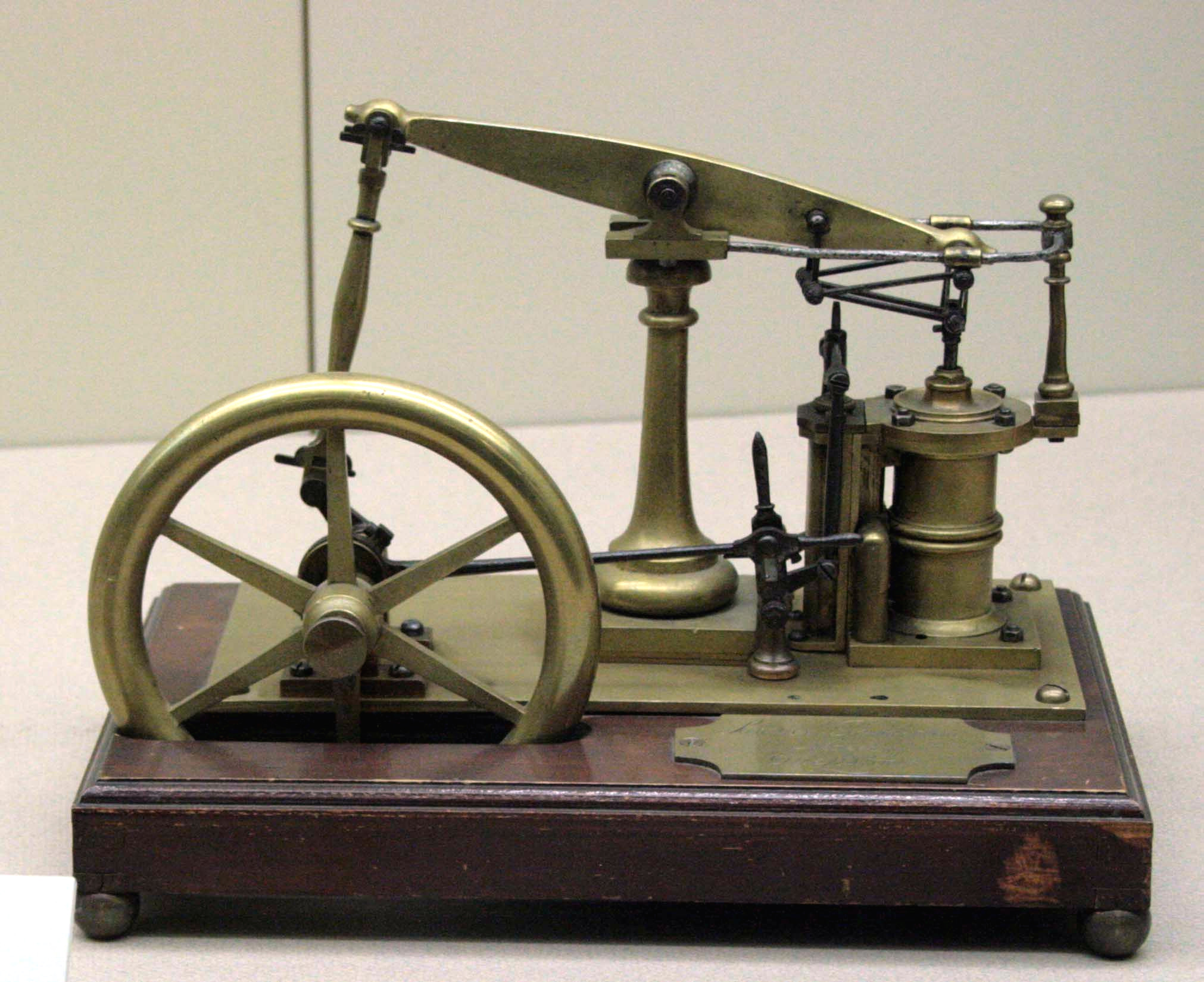
Humanity has used the wheel in transportation; like carriages, train cars, steam engines, ambulances, fire trucks, school buses, etc. The wheel and axle have also been used in millstones, waterwheels, and windmills and played a part in machine design and the Industrial Revolution. 

Trust me, I could go on and on about inventions involving the wheel and axle, but we would be here all day. Do something for me, and imagine a world without wheels. How would your life change? 

You do not have a clock to wake you up because gears and axles do not exist. Yup, gears evolved from wheels. You need a gear and an axle to have a working clock. On top of that, you have no car, bike, or carriage to travel anywhere. Planes would have no landing gear and boats have no motors, so your only option would be horses and sailboats.

I believe if we dismiss ideas, then our society would not be in the place it is today. If we refuse to look at other perspectives and criticisms, our society will become stagnant and dull. Individual Self-Fulfillment plays a role in promoting innovation because it allows like-minded people to meet and talk with each other, providing a new perspective on the world with their experiences.

If we lost our free speech, citizens would be unable to criticize the ideas of other individuals or the government. An example of this can be seen in how Elon Musk is currently handling Twitter. In the past, Elon let people get a verified checkmark for $7.99, limited the number of messages free users could see per day, and is now removing the ability to block accounts. 

The current state of Twitter shows me what could happen to our society if we lost our free speech and our ability to innovate, either the government gets restructured as a result of the chaos or society collapses, taking the government with it. 

Either way, the government is in a lose-lose situation. Twitter is still around today, but it lost its top advertisers and has  seen an increase in hate speech according to the CCDH. Twitter responded with a lawsuit, claiming the organization was running a "scare campaign".

I do believe we should not immediately disregard ideas, but I am also aware that some ideas can be silly. Even then, some ideas sound stupid on paper, but they are clever once you think about it. Here are a few examples of that. Some of my favorites include connecting two Ziploc bags by turning one inside out and using coins as tweezers.


On the other end, some ideas are so foolish it makes people wonder what the inventor was thinking. An example I recall is from a company called Juicero, a company that worked with farmers to make packets of juice from fresh produce. They also created a $700 juicer to squeeze this juice, which is what they centered their business around and helped the company get $120 million in funding. 

There was one slight problem, however, you didn't even need the juicer at all! While yes, juicers are used to juice fruits and vegetables, the juice from Juicero was premade and prepackaged in bags. So all you needed to do to squeeze out the juice was to use some force, like your hands.

Thanks to free speech, we can express ideas we come up with and share them with like-minded individuals, who will support or give a critique of the idea. While it may be harsh to hear criticism, it will benefit the idea if it is done right. 

The Marketplace of Ideas gives ideas the ability to reach a wide audience of people and allow them to experiment with the idea, which could influence their own! Alas, not all ideas are good ones, and the marketplace can also stop those in their tracks before they can be carried out. 

Friday, September 8, 2023

Blog #2 - Workings of the US Supreme Court

 After reading an article about the Supreme Court, I recalled some things I already knew about it, like the 9 justices serving in it and their ability to decide which cases to review and Article III Section 1 allowing Congress to create a Supreme Court and inferior courts across the US.

 I learned that Article III did set up the Supreme Court, but failed to define the structure of the Supreme Court or how many judges it could have. To fix this issue, the Judiciary Act of 1789 was signed into law, assigning one chief justice and five other justices to serve in the Supreme Court. 

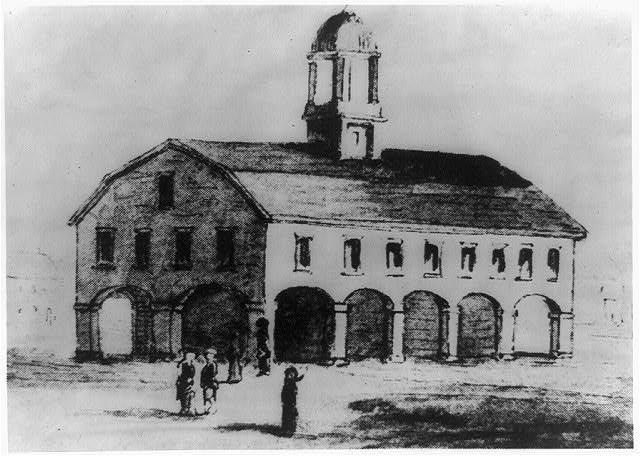
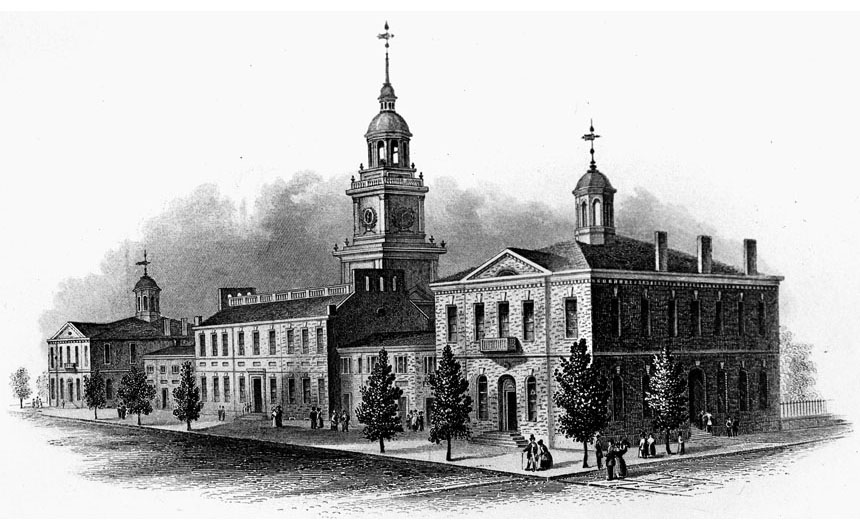
I also learned that the Supreme Court first met on February 2, 1790, in the Merchant Exchange building in New York City, I originally thought they first met in the Capitol! The Supreme Court then moved to the new Capitol in Philadelphia, located in three different buildings. 

They stayed here until the Capitol moved to Washington D.C., but they were temporarily placed in the Capitol while it was under construction.


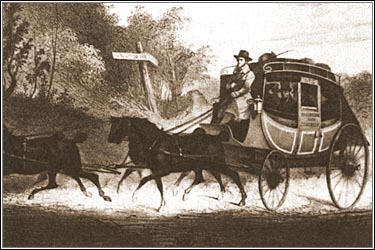
The Judiciary Act of 1789 also introduced "circuit riding", which required the judges of the Supreme Court to ride across the country to their assigned circuits. Due to the only mode of transportation being horses, they faced rough roads and were at the mercy of the weather for their six to nine-month long journey. 

Thankfully, the Judicial Act of 1869 assigned circuit judges to the circuit courts, limiting the need for circuit riding. Congress created the United States Court of Appeals in 1891, abolishing the circuit courts and ending the need for circuit riding.


After watching the videos talking about the Supreme Court, I was surprised to learn about the workload the Supreme Court has! They receive around 7000 cases per year, and they only accept around 100 - 150. Despite the large number, it is good the Supreme Court is receiving this many cases because they rely on the trust of the American people to function. 

It means we trust the court to provide an unbiased interpretation of the law. The judges are not afraid of asserting their independence after they are successfully nominated by the president, contributing to this trust. For example, Sandra Day O'Connor was nominated by Ronald Reagan and became the first female judge in the Supreme Court. Contrary to Ronald Reagan being a Republican, O'Connor supported abortion and supported Roe v. Wade, despite Republicans wanting to overturn it.


Another thing I was surprised to learn about was former president William Howard Taft, as he was the only person to be a US president and a Supreme Court chief justice! During his time as chief justice, he helped to pass the Judge's Act of 1925, which allowed the justices of the Supreme Court to hear out cases and limited obligatory jurisdiction. 

It makes me wonder why he is not talked about when the Supreme Court is mentioned, he contributed to the way the Supreme Court works today! What if the Supreme Court had to take all 7000 cases a year, hear all of the oral arguments, and write all of the opinions from those cases?

Tuesday, September 5, 2023

Blog #1 - My Top 5 Personal Sources of Information

 I will admit, I did not pay much attention to the news when I was growing up, so I do not have a go-to news platform like CNN or Fox. I was hesitant to listen to these platforms because I felt I would be drawn to one side of the political spectrum and get caught in an echo chamber. 

This skepticism remained, but I slowly became more accepting of news sources when I went through high school and became a student at High Point University. Over time, I grew to like these 5 sources and would recommend you to give them a try!

1) SmartNews


SmartNews is a news app that is only available on Android and iOS phones, so there is no way to view it on computers. The app doesn't publish its own news, but it finds articles from publishers such as Fox News, CNN, and Reuters to present to the user. 

It also has different types of news the user can view, such as sports news, world news, political news, etc. The time I first saw this app, sometime around 2018, I assumed it was nothing special and slowly forgot about it. Since then, SmartNews has changed, a lot. 

The first major update I noticed was the 2020 election update, which showed the user which countt in each state voted for Trump or Biden, as well as which seats in the House of Representatives or Senate were taken by Democrats or Republicans at this time. 

SmartNews also introduced the "News From All Sides" slider, which allows users to see news sources from both political parties. This was what got me to go back to SmartNews because I recall using this app to be informed about the 2020 election and learn the results. 

The "News From All Sides" slider reminded me of a website that gave me an insight into political biases, called allsides.com Thanks to this update, I can distinguish the left-leaning, neutral, and right-leaning publishers in my news!

As if this was not enough to get me back into SmartNews, they also added a COVID-19 tracker to track cases across the US and the world, which I regularly checked up on when I was attending high school.

Other features include a local map displaying upcoming weather, extreme weather, statements from the U.S. National Weather Service, and a section dedicated to talking about TV shows and movies. SmartNews has been rated the "Best for Local News" by BestApp.com and contains lots of ways to view news you would be interested in.

2) Pubity Group


Even though SmartNews has it all, it is also a good idea to get your news from several sources. If you have never heard of Pubity Group before, I don't blame you. It started with one person posting soccer scores on an Instagram account, but soon turned into a social media giant with accounts on Instagram, Facebook, TikTok, and Twitter, to name a few! 

I first heard of Pubity when they were reporting the events of the Titan, a submersible that sank in June 2023. Around the same time a boat with 750 migrants sank off the coast of Greece. If Pubity had not reported this, I may have never known about this tragedy since the Titan overshadowed it. 

They also reported Oceangate shutting down their website and social media accounts around a month after the submersible had sunk. I only pay attention to their main page, but they also discuss news about AI, gaming, and other news. They also post memes and pets, so they are not serious all the time.

3) Citizen


Citizen is another app I use that reports on 911 calls in your local area as well as reports on shootings, amber alerts, and other events. For local news, the app detects all alerts in a 1.5-mile radius away from the user and they could range from police activity to a shooting and alerts from the National Weather Service, just like SmartNews. 

Thankfully, there has not alerted me to an emergency on campus, but it has alerted me to a few shootings, one of which is the University of Virginia shooting last year. My brother went to a different college in Virginia, but this alerted me to the danger he may be in. He turned out ok, but Virginia Tech's football game against UVA got canceled as a result. 

Citizen also alerted me to the UNC Chapel Hill shooting around the end of August, which is where some of my former classmates went to. 

It also informed me about the Chinese spy balloon flying above the US at the start of this year thanks to Citizen users posting recordings of the balloon over their homes. While similar situations have not occurred since this, it is good to know that Citizen will alert its users.

4) YouTube


The three sources of news I listed above cover global and local news, but what about news specifically related to gaming? Sure, SmartNews and Pubity Group cover some news about gaming, but what about the opinions of gamers and news about game companies? 

For me, this is where YouTube comes in, more specifically YouTube channels such as YongYea and SomeOrdinaryGamers. YongYea almost exclusively covers news about games and game companies such as Volition Studios shutting down, Ubisoft allegedly deleting accounts, and Overwatch 2 canceling its PVE mode. 

SomeOrdinaryGamers covers tech and social media drama while occasionally covering games. While he does not regularly discuss games, he covers security exploits such as a security exploit that can get anybody's Xbox account banned. As an Xbox gamer, this video was invaluable to me and I was extra careful when playing my games.

5) LinkedIn


LinkedIn is a social media platform focused on networking, following news from companies across the world, and searching for jobs. Not only has LinkedIn helped me network with professionals in the gaming industry and my peers, but it introduced me to some resources to help with my future job hunt, which is Hitmarker and Games Jobs Direct. 

It also shows what developers have been working on, including rain effects, realistic water, and projects like "Lost Fragment".

Final Blog - My Relationship with Technology

I believe my relationship with technology is as impactful as it is with other people, but not in the same way. I remember how I was one of t...